Article: Rosacea? Here's what you need to know
Rosacea? Here's what you need to know
Rosacea: What It Is, What Can Help & How to Care for Rosacea-Prone Skin
Rosacea-prone skin can sometimes feel like it has a mind of its own.
One day your skin feels calm and comfortable. The next, something as simple as a change in temperature, a hot drink or a new skincare product can leave your complexion looking flushed and feeling sensitive.
If this sounds familiar, you are certainly not alone.
Rosacea is a long-term skin condition that primarily affects the face. It can cause persistent or recurring redness, flushing, visible blood vessels and increased skin sensitivity. Some people also experience small bumps or spots, dryness, swelling, burning or stinging.
Rosacea's symptoms can be managed significantly with appropriate care, identifying personal triggers and — importantly — treating the skin gently.
And when it comes to skincare, sometimes less really is more.
What is rosacea?
Rosacea is a chronic inflammatory skin condition that most commonly affects the central areas of the face, including the cheeks, nose, forehead and chin.
The first signs can be surprisingly subtle. You may simply notice that you flush more easily than you used to, or that your skin suddenly reacts to products that previously felt perfectly comfortable.
Common signs of rosacea can include:
-
Facial redness and flushing
-
Skin that feels hot, sensitive or uncomfortable
-
Burning or stinging
-
Visible small blood vessels
-
Dryness and roughness
-
Swelling
-
Acne-like bumps and spots
Rosacea looks different from person to person, and redness can also be more difficult to see on darker skin tones.
What causes rosacea flare-ups?
The exact cause of rosacea isn't fully understood, and everyone's skin is different.
However, certain triggers are well known for making symptoms worse in some people.
These can include sunlight, hot or cold weather, alcohol, spicy foods, hot drinks, exercise and stress.
Skincare itself can also become a trigger.
When skin is already sensitive, throwing increasingly strong exfoliants, scrubs, acids and active ingredients at it isn't necessarily the answer.
This is why learning your individual triggers — and creating a skincare routine that feels gentle and predictable — can make such a difference.
The skin barrier matters
Your skin barrier is essentially your skin's protective outer layer.
One of its jobs is to help keep moisture inside the skin while protecting it from the outside environment.
When skin is dry, sensitive or easily irritated, supporting that barrier becomes particularly important.
Rather than trying to exfoliate redness away, a rosacea-friendly routine should generally focus on gentle cleansing, moisturising, reducing unnecessary irritation and protecting the skin from the sun.
Dermatologists recommend moisturising rosacea-prone skin even when it feels oily because moisturiser helps retain hydration and can make irritated skin feel more comfortable.
Ceramides can also be particularly useful in moisturising formulas because they are naturally occurring components of the skin barrier.
Keep your routine gentle
Rosacea-prone skin generally doesn't need an elaborate ten-step routine.
It needs consistency.
Wash the skin gently without scrubbing, use lukewarm rather than very hot water, avoid unnecessary friction and choose products formulated with sensitive skin in mind.
Daily sun protection is particularly important because sunlight is a common rosacea trigger. Use a broad-spectrum SPF 30 or higher every day and combine it with shade and other sun-protective measures where possible.
If a product causes burning, stinging or persistent irritation, listen to your skin.
Sensitive skin doesn't need to be forced to tolerate a product simply because that ingredient happens to be trending.
Our approach to rosacea-prone and sensitive skin
At Wojciechowska Cosmetics, we wanted to create a routine that approached sensitive, redness-prone skin differently.
Instead of aggressive exfoliation or heavily absorbing clay treatments, our Rosacea & Sensitive Skin Bundle focuses on three things:
gentle cleansing, barrier support and nourishment.
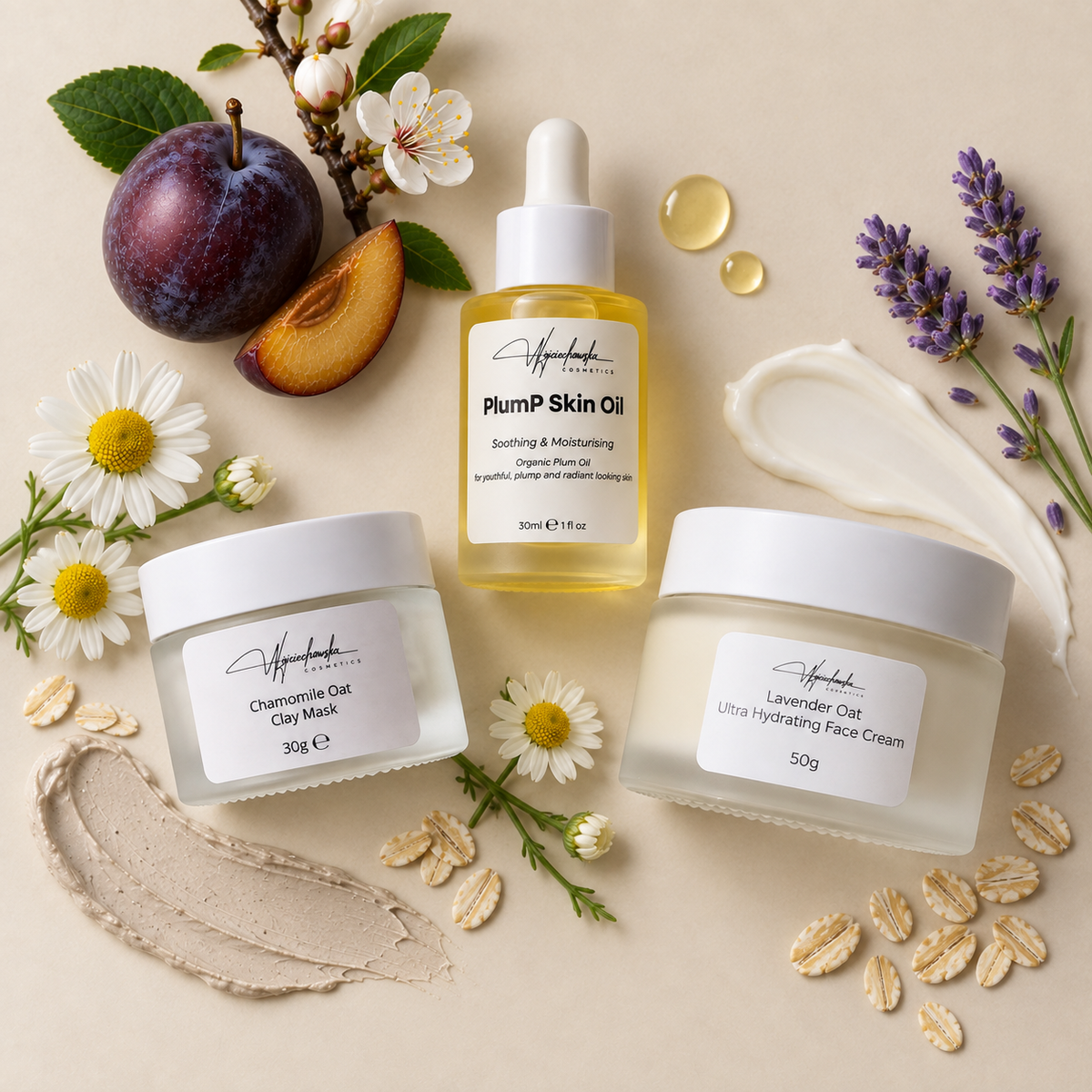
The routine combines three products designed to complement one another:
Chamomile Oat Clay Mask
Lavender Oat Face Cream
PlumP Skin Oil
Together, they create a simple routine for dry, sensitive, dehydrated and redness-prone skin.
Step 1: Chamomile Oat Clay Mask
Clay masks are often associated with that very dry, tight feeling after rinsing.
That's exactly what we didn't want here.
Our Chamomile Oat Clay Mask was created specifically with dry, sensitive and redness-prone skin in mind, combining gentle cleansing with ingredients chosen to help comfort and care for delicate skin.
One of the stars of the formula is colloidal oatmeal, alongside AvenaPlex™, which help soothe and support the skin barrier.
We've also included organic chamomile for gentle botanical care particularly suited to sensitive and redness-prone complexions.
The goal isn't to strip every trace of oil from your skin.
It's to leave it feeling clean, comfortable and cared for.
Use the mask around once or twice per week. Mix a small amount with water, hydrolat or plain unsweetened natural yoghurt, apply to clean skin and leave for approximately 5–10 minutes.
Most importantly, don't allow the mask to become completely dry and cracked on your face. Keep it slightly damp and rinse gently without scrubbing.
Step 2: Lavender Oat Face Cream
After cleansing comes something rosacea-prone skin often desperately appreciates:
moisture and barrier support.
Our Lavender Oat Face Cream is a rich, comforting moisturiser created for dry, dehydrated, sensitive and redness-prone skin.
The formula combines oat-derived ingredients with ceramides and vegan collagen amino acids.
Ceramides help support the skin's natural barrier and reduce moisture loss, while the formula provides the moisturisation dry and sensitive skin needs to feel softer and more comfortable.
Vegan collagen amino acids complement the formula by conditioning the skin and helping support a smoother, more supple-looking complexion.
It also contains organic lavender hydrolat, chosen to provide gentle botanical care without turning the cream into an intensely fragranced skincare product.
For skin that regularly feels tight, dry or uncomfortable, the purpose of this step is beautifully simple:
give the skin back comfort, moisture and support.
Step 3: PlumP Skin Oil
And finally, we seal in all that lovely nourishment.
Our PlumP Skin Oil is based around cold-pressed plum seed oil, providing the skin with nourishing fatty acids and helping reduce moisture loss.
Facial oils don't add water to the skin in the same way that a water-based moisturiser does, which is exactly why we love pairing PlumP with the Lavender Oat Face Cream rather than treating the two products as interchangeable.
The cream provides hydration and moisturisation.
The oil provides lipid-rich nourishment and helps reduce moisture loss.
Together, they make a particularly comforting combination for dry, tight-feeling skin.
Morning and evening, simply mix 2–3 drops of PlumP Skin Oil with a small amount of Lavender Oat Face Cream in your palm and gently massage over your face and neck.
No complicated layering required.
A simple routine for skin that needs a little kindness
Living with rosacea can sometimes make skincare frustrating.
You buy something that's supposed to transform your complexion, only to discover that your skin doesn't particularly appreciate the idea.
That's why our philosophy with sensitive skin is not about doing more.
It's about understanding what your skin actually needs.
Cleanse gently.
Support your moisture barrier.
Provide nourishing lipids.
Protect your skin from the sun.
Learn your individual triggers.
And above all, listen to your skin.
Our Rosacea & Sensitive Skin Bundle brings the Chamomile Oat Clay Mask, Lavender Oat Face Cream and PlumP Skin Oil together into one simple routine created especially for dry, sensitive and redness-prone complexions.
Because sometimes the best thing you can give sensitive skin isn't another powerful active.
It's a little peace and quiet.
Important note
Cosmetic skincare can help moisturise, nourish and support sensitive and rosacea-prone skin, but it does not treat or cure rosacea. however if you're looking for a natural, safe skincare to help you manage those rosacea related symptoms, we're here for you.